Source(s): Nina Eckberg
Shot-hole disease is a combination bacterial infection (Xanthomonas prunii) and fungal disease (Blumeriella gaapi and/or Cercospora sp.).
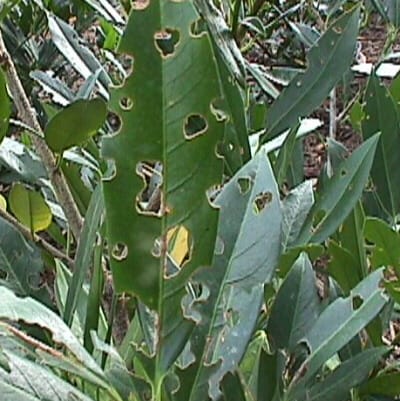
Shot-hole Disease Identification
Shot-hole disease (on a laurel in the photos) is a combination bacterial infection (Xanthomonas prunii) and fungal diseases (Blumeriella gaapi and/or Cercospora sp.)
Shot-hole Disease Appearance
Circular holes in the leaves that eventually join and make larger holes. The appearance of shooting a shotgun at the shrub and causing multiple holes.
Shot-hole Disease Hosts
Laurels (bay and Otto Luyken), camellia, ligustrum (privets), hydrangea, ivy.
Shot-hole Disease Season
April through October, peak in May and September.
Shot-hole Disease Damage
Leaves appear to be ‘eaten’ away by the disease, leaving a ragged appearance. As leaves are damaged, they begin to fall away, the plant looses its ability to make food and can become stressed.
Shot-hole Disease Integrated Pest Management
Sanitation is the best way to keep the disease from coming back. Clean up contaminated leaves from under the plant. When diseased leaves build-up under the plant, rain or watering can splash the disease back up on the plant. Spray the leaves with Mancozeb, Kocide, Kop-R-Spray or other recommended products containing copper at the first sign of a problem. Always READ THE LABEL and DIRECTIONS FOR USE section carefully when using pesticides.
Resource(s):
Common Landscape Diseases In Georgia
Center Publication Number: 55

- Root Rot on Evergreens - September 23, 2013
- Shot-hole Disease - September 23, 2013
- Gray Mold or Botrytis Blight on Pansies - September 22, 2013